
Does Double-Sided Conductive Fabric Tape Actually Replace Traditional EMI Gaskets in Compact Electronics?
Update time : 2026-06-23
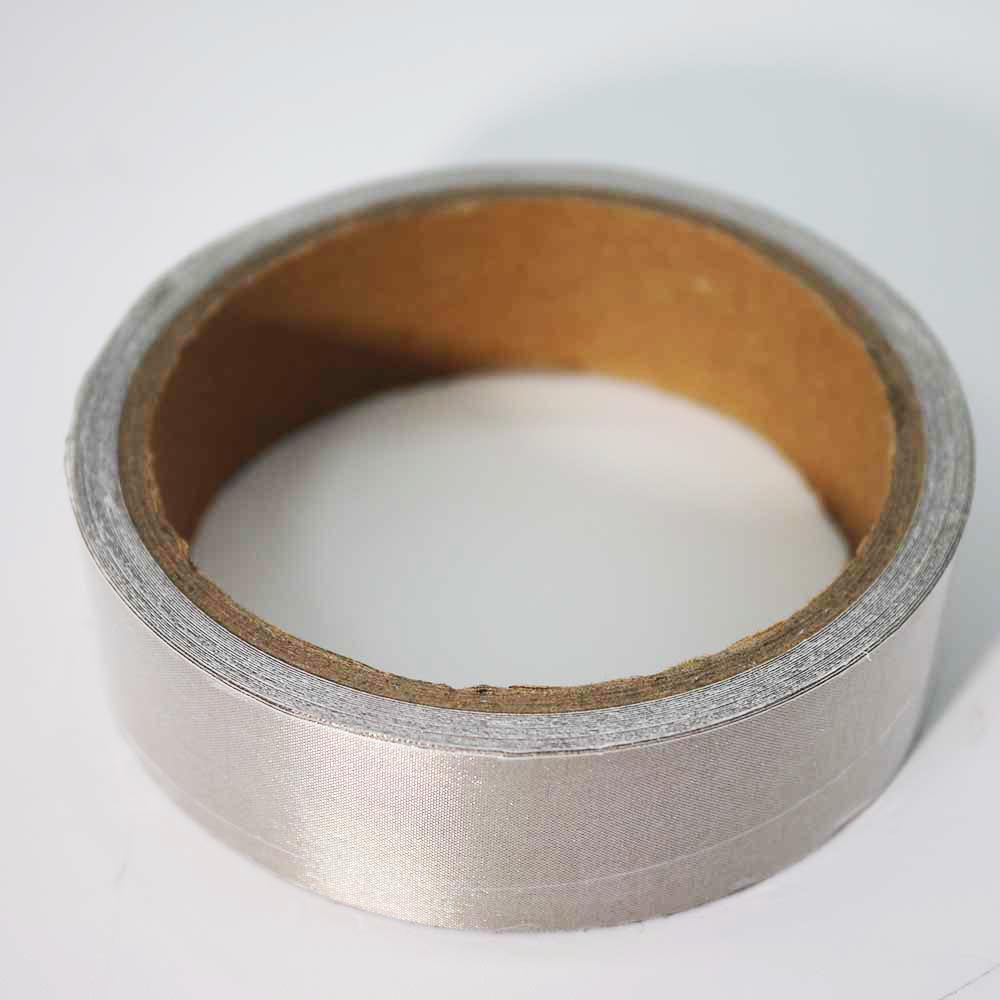
Inside smartphones, tablets, and IoT modules, the space between a PCB and the metal housing is often measured in millimeters. Traditional EMI gaskets — thick beryllium-copper finger stocks or molded elastomer — simply won't fit. Yet electromagnetic interference (EMI) from high-speed data lines and RF transceivers still needs suppression, and electrostatic discharge (ESD) grounding paths must be reliable. The Double-Sided Conductive Fabric Tape for EMI Shielding & ESD Grounding — Plain-Weave Metal-Coated Conductive Fabric with Conductive Acrylic Adhesive on Both Sides, Low Surface Resistance, Flexible Die-Cut Compatible (Onlyja® / Yijiayi Brand) is designed to fill this gap. It provides both electrical continuity and EMI attenuation in a thin, conformable format that can be die-cut to any shape and applied by hand or automation. But how does a fabric-based tape achieve meaningful shielding effectiveness, and when should you specify it over copper foil tape or conductive foam?
Construction: Why a Metal-Coated Fabric + Conductive PSA Works
Unlike a solid metal foil, this tape is a three-layer composite:
- Conductive Fabric Substrate: Plain-weave polyester or nylon base is vacuum-metalized or electroless-plated with nickel/copper alloy — creating a continuous conductive mesh across the tape face.
- Conductive Acrylic Adhesive (Both Sides): The adhesive contains conductive particles (nickel or silver-coated particles in acrylic matrix) so that electrical continuity is maintained through the bond line — not just across the fabric face.
- Release Liners (Both Sides): Silicone-coated PET liners protect the adhesive until application; one or both are removed depending on whether you're doing a "sandwich" bond (PCB → tape → metal housing) or a shim application.
Result: a double-sided electrically conductive interface with typical surface resistance ≤ 50 mΩ/□ (ohms per square) — low enough to serve as a grounding bridge and EMI reflective layer.
Key Technical Parameters (From Product Page Data)
Property | Typical Value |
|---|---|
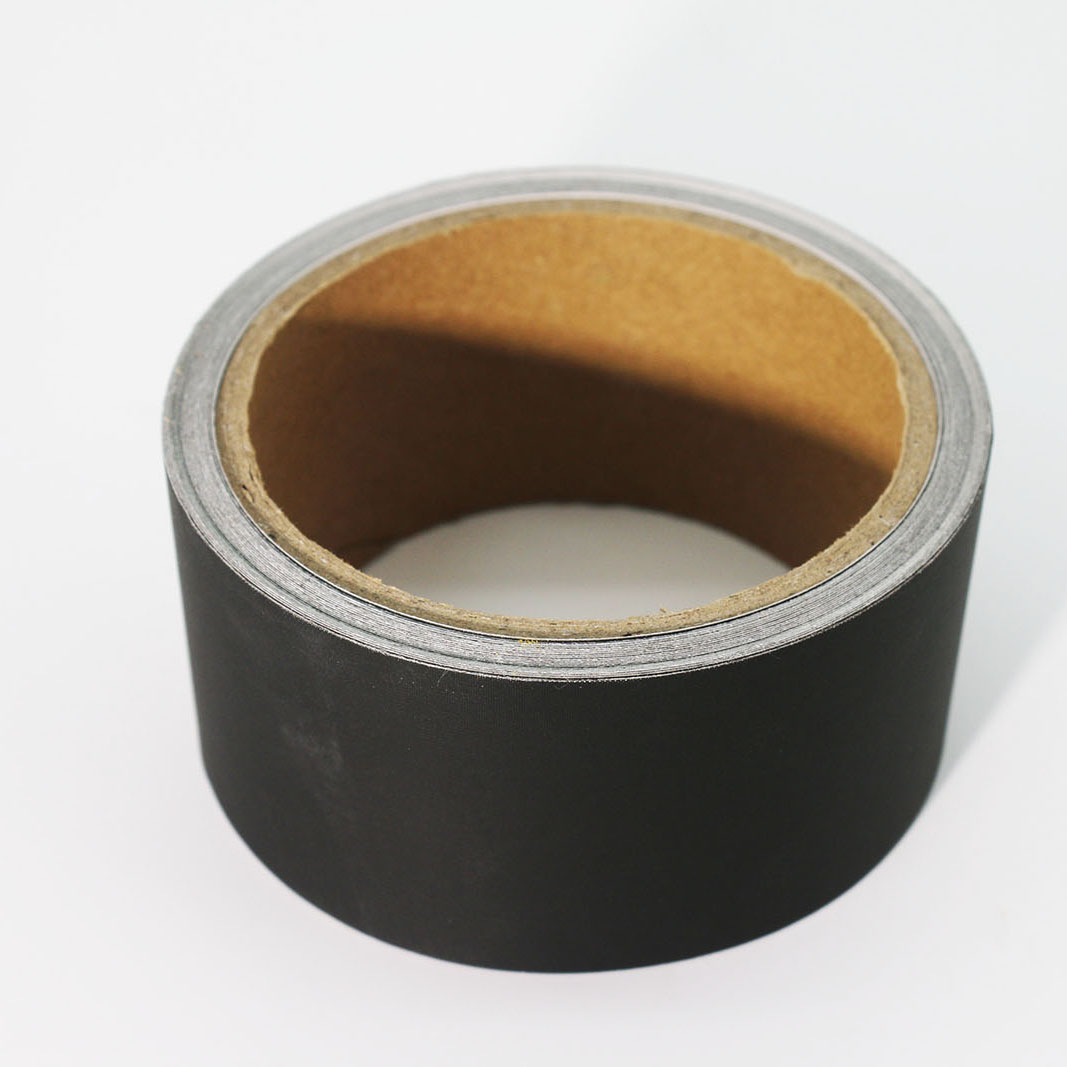
Color | Gray (standard; black or custom on request) |
Thickness | 0.08 ± 0.01 mm (3.15 mil) |
Width (Master Roll) | 1270 mm (50"); custom slit widths available (e.g., 3 mm / 5 mm / 10 mm / 20 mm) |
Peel Strength (180°) | ≥ 800 gf/inch (tensile tester, SUS panel) |
Holding Power | ≥ 48 h @ 1 kg / 25 × 25 mm @ 80°C |
Temperature Resistance | Up to 80°C continuous (some formulations to 105°C on request) |
Initial Tack (Ball Test) | ≥ #5 (J. Dow method) |
Surface Resistance | ≤ 50 mΩ/□ (four-point probe) |
Flame Retardancy | Non-FR as standard (FR version available on inquiry) |
Shielding Effectiveness | Typically 30–60 dB @ 100 MHz–1 GHz (depends on coverage & grounding scheme — verify per application) |
Where It Excels vs. Foil Tape or Conductive Foam
Application Need | Foil Tape (Cu/Al + Cond. Adh.) | Conductive Foam / Elastomer Gasket | Double-Sided Conductive Fabric Tape |
|---|---|---|---|
Ultra-Thin Gap (≤ 0.15 mm) | ✅ Works | ❌ Too thick | ✅ 0.08 mm — fits easily |
Complex / Small Die-Cut Shapes | ✅ Can be die-cut | ✅ Moldable but expensive | ✅ Easy kiss-cut / rotary die |
Conformability to Slightly Uneven Surfaces | ⚠️ Rigid — bridges gaps poorly | ✅ Excellent | ✅ Fabric conforms slightly; adhesive fills micro-voids |
Cost for High-Volume Consumer Electronics | Low-Medium | High | Low-Medium (competitive with foil, cheaper than molded gasket) |
ESD Grounding Path (PCB ↔ Shield Can / Chassis) | ✅ | ✅ | ✅ Both sides conductive |
High-Frequency Shielding (> 3 GHz) | Best (solid metal) | Good (if properly compressed) | Adequate for many consumer apps; verify SE spec |
Typical Application Scenarios
1. EMI Suppression & Grounding in Mobile Devices
Applied between a metal shield can (RF cage) and the PCB ground plane or mainboard — provides a low-impedance ground return and attenuates radiation from clock lines or RF sections.
2. FFC / FPC Cable Shielding Termination
Wraps or terminates the shielded side of a flex cable assembly and bonds it to chassis ground — simpler than soldering a drain wire in high-volume assembly.
3. Antenna / Camera Module EMI Isolation
Small die-cut pieces placed around sensitive antenna feed lines or image sensor modules to prevent cross-talk without adding height.
4. Metal Housing / Enclosure Seam Bonding (Low-Profile)
Where a continuous conductive path is needed across a mating seam but a fingerstock gasket is too tall — a narrow strip of conductive fabric tape bridges the gap.
5. ESD Temporary or Secondary Ground Path
Connects static-sensitive components to the chassis during assembly/test, or supplements primary grounding in finished goods.
Correct Application Technique
- Surface Prep: Wipe bonding surfaces (PCB ground pad, shield can, metal housing) with isopropyl alcohol. Even small oil films increase contact resistance.
- Die-Cut to Size: For repeatable placement, have the tape kiss-cut to your exact pad/shape — avoids misalignment on tiny ground tabs.
- Firm Pressure After Placement: Use a rubber roller or fingertip pressure to ensure full adhesive wet-out — air gaps increase impedance.
- Avoid Over-Stretching: The fabric backing has limited elongation; overstretching can distort the weave and affect surface resistance uniformity.
- Storage: Keep in original sealed bag; desiccant recommended in humid climates to prevent adhesive uptake of moisture before use.
Sourcing Checklist for B2B / EMS Buyers
When requesting a quote for Double-Sided Conductive Fabric Tape for EMI Shielding & ESD Grounding:
- ✅ Specify width(s) — e.g., 10 mm slit rolls or 1270 mm master roll for in-house slitting.
- ✅ Confirm surface resistance requirement — ≤ 50 mΩ/□ standard; lower values available on custom.
- ✅ Ask for shielding effectiveness test data (if required by your EMC spec).
- ✅ Request samples in slit form + die-cut demo pieces for in-line trial.
- ✅ Inquire about OEM private label / custom packaging if reselling.
Conclusion: Thin, Flexible, and Electrically Active on Both Sides
The Double-Sided Conductive Fabric Tape for EMI Shielding & ESD Grounding — Plain-Weave Metal-Coated Conductive Fabric with Conductive Acrylic Adhesive on Both Sides, ≤ 50 mΩ/□ Surface Resistance, 0.08 mm Thick (Onlyja® / Yijiayi Brand) is not a replacement for every EMI gasket — but for the vast majority of consumer electronics, IoT modules, and compact enclosures where space is at a premium, it offers the optimal balance of thinness, conformability, grounding reliability, and cost. It bridges the gap between a simple copper foil (rigid, single-sided conduction) and a bulky molded gasket (expensive, thick), making it the go-to choice for EMI/RFI mitigation and ESD grounding in modern portable electronics.
RELATED NEWS
Read More >>
 Can a Multi-Layer Nylon Cloth Tape with Optional Aluminum Foil Backing Really Bundle Hot-Engine Wiring and Absorb Minor Vibration in One Wrap
07-03 2026
In engine-bay wiring, robotics cable carriers, and industrial control cabinets, a single-function vinyl electrical tape often fails — it softens above 80°C, the adhesive oozes in summer heat, and it o
 Can a Laser Inkjet and Thermal Transfer Compatible Printable Adhesive Label Tape Really Survive Warehouse Scuffs and Freezer Storage While Staying Scannable
07-03 2026
In logistics centers, labs, automotive parts depots, and even home office archives, the weakest link in an asset-tracking system is often the label itself — ink smears from handling, adhesive lifts in
 Does Double-Sided Conductive Fabric Tape Actually Replace Traditional EMI Gaskets in Compact Electronics?
06-23 2026
Inside smartphones, tablets, and IoT modules, the space between a PCB and the metal housing is often measured in millimeters. Traditional EMI gaskets — thick beryllium-copper finger stocks or molded e
 Will a Flame-Retardant Orange Fabric Wire Harness Tape Withstand 150 degrees Under the Hood Without Leaving Residue?
06-23 2026
In engine bay wiring, the two things that destroy a standard vinyl electrical tape are heat and oil splash. Above 80–90°C, cheap PVC softens, the rubber adhesive liquefies, and you get a sticky, condu
 Can a Single Light-Blocking Tape Replace Multiple Shielding Layers in Display Assembly?
06-10 2026
The Light-Blocking Tape Model L020-193 for Display and Optical Shielding is designed to consolidate these functions into a single, high-performance adhesive solution. With multiple substrate options—
 Can a 0.05mm Light Blocking Tape Really Deliver 99.9 percent Blackout for Sensitive Optics?
06-10 2026
The Light Blocking Tape Model L012-193 for Optical and Electronic Blackout offers a radically simpler approach: an ultra-thin, high-tack adhesive tape that blocks 99.9% of visible light while adding
 Is Acetate Cloth Tape the Ultimate Flame-Retardant Solution for Electrical Insulation?
05-30 2026
This has pushed engineers toward specialized materials like Acetate Cloth Tape, specifically models like the Z0A020-00-B. But does this UL-certified, flame-retardant tape offer the robust protection i
 Why High-Temperature Orange Automotive Wire Harness Tape is the Smart Choice for High-Heat Engine Bays
05-30 2026
In complex wiring systems, it allows for quick visual identification of specific circuits (e.g., high-voltage systems in EVs, safety-critical circuits, or aftermarket additions), reducing diagnostic t
 Can Double-Sided Conductive Fabric Tape Replace Traditional EMI Gaskets?
05-21 2026
This has led to the rise of Double-Sided Conductive Fabric Tape—a flexible, adhesive-based solution that promises to simplify design while maintaining performance. But can a simple tape truly replace
 Why Black Conductive Fabric Tape is the Go-To for Light-Sensitive Electronics
05-21 2026
This is where Black Coated Conductive Fabric Tape steps in—a specialized material that combines the opacity of a light seal with the functionality of an EMI shield. But what specific problems does it